
Part 2 of 3 in the Gospel Response Trilogy. Best read after “What If I Don’t?”
Introduction: From Dread to Decision
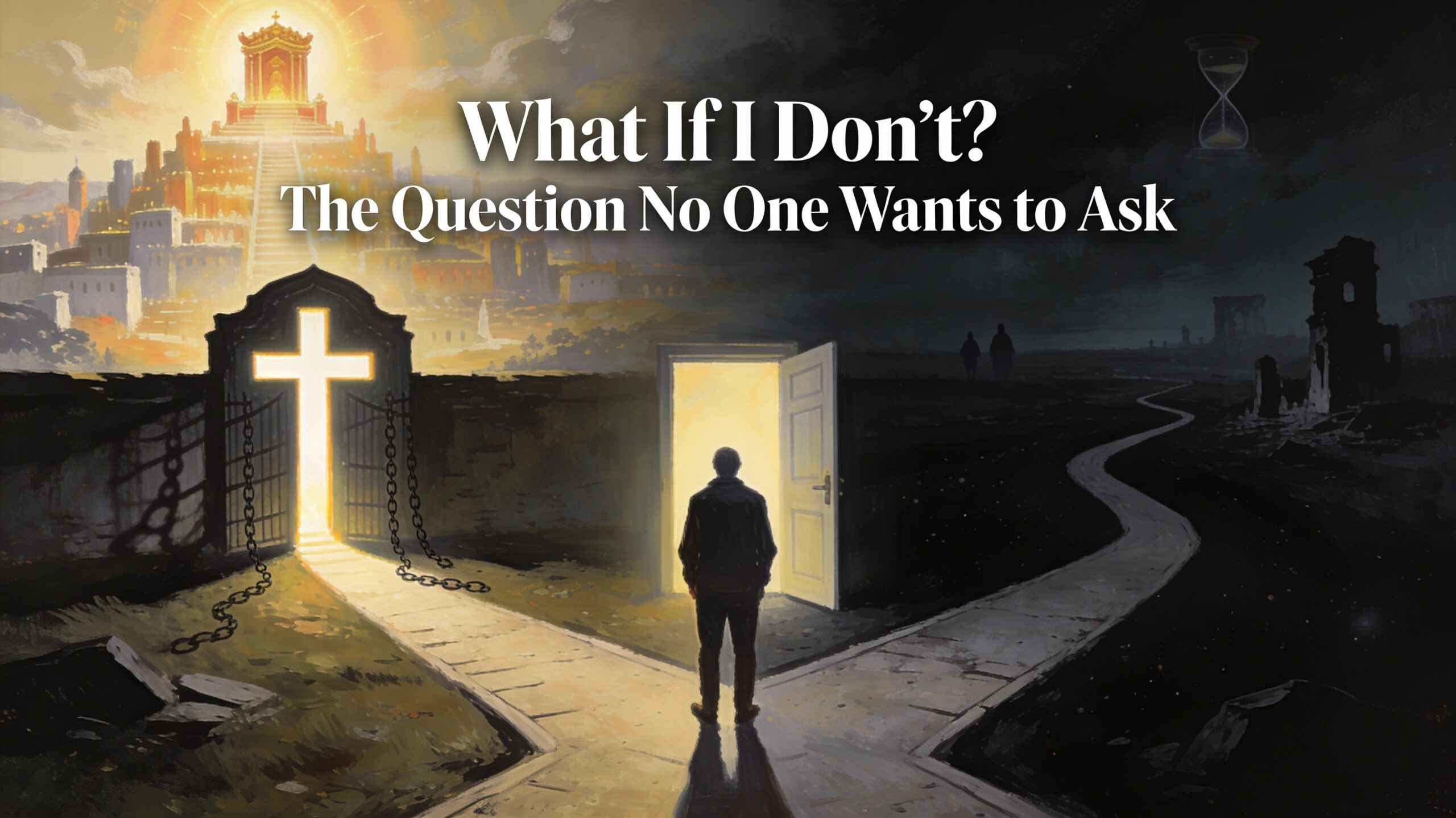
In the last post, you stared into the question no one wants to ask: “What if I don’t repent and believe the gospel?” You saw that staying “in Adam” means remaining condemned already, heading toward a real, eternal hell under the just wrath of a holy God.
But the command of Jesus is not only a warning; it is an invitation. “Repent and believe in the gospel.” [Mark 1:15] If everything Scripture says about wrath, judgment, and hell is true, then the next question matters more than any career move, relationship, or life goal you will ever have:
What if I do repent and believe the gospel?
What actually happens when someone stops treating the gospel as information to analyze and begins to treat Christ as Lord to obey and Savior to trust?
Part 1: What Does It Mean to “Do” What Jesus Commands?
1. The call that goes deeper than your ears
The outward command — “Repent and believe” — goes to every hearer of the gospel. That is what theologians call the general or external call. But left to ourselves, that call bounces off a dead heart. The mind may understand the words, but the will remains chained to sin and unbelief.
Reformed theology speaks of something deeper: https://www.thegospelcoalition.org/essay/effectual-calling/effectual calling. This is the inward work of the Holy Spirit who takes that same gospel call and makes it effective in the hearts of God’s elect. The classic catechism answer puts it this way:
Effectual calling is the work of God’s Spirit, whereby convincing us of our sin and misery, enlightening our minds in the knowledge of Christ, and renewing our wills, He persuades and enables us to embrace Jesus Christ, freely offered to us in the gospel.
In other words, when you really “do” what Jesus commands—repent and believe—it is because God has first done something in you. He has cut you to the heart over your sin, opened your eyes to the beauty and sufficiency of Christ, and bent your will so that you now want what you once resisted.
So “What if I do?” is not asking, “What if I somehow save myself by trying harder?” It is asking, “What happens when God’s effectual call has reached me, and I finally come to Christ in repentance and faith?”
2. Repentance unto life: more than feeling bad
The Westminster Shorter Catechism defines repentance unto life like this:
Repentance unto life is a saving grace, whereby a sinner, out of a true sense of his sin, and apprehension of the mercy of God in Christ, with grief and hatred of his sin, turns from it unto God, with full purpose of, and endeavor after, new obedience.
That means:
-
- You come to see your sin as God sees it—offensive, destructive, personally against Him.
-
- You grasp, not just your guilt, but also God’s mercy in Christ—that the very One you sinned against offers you pardon through His Son.
-
- Grief and hatred of your sin rise in your heart—not just grief over consequences, but grief over the dishonor to God.
-
- You turn from sin to God—changing direction—with a real, Spirit-wrought intention to obey Him going forward.
Repentance unto life is not a box you check once and forget. It is the beginning of an entirely new posture toward God and sin. It is not the price you pay to buy salvation; it is a grace God gives you as He brings you into salvation.
3. Faith in Christ alone: more than agreeing with facts
Saving faith is likewise more than nodding along with Christian doctrine. The Westminster Confession describes it as receiving and resting on Christ alone for justification, sanctification, and eternal life.
That means faith:
-
- Believes what God says in His Word is true.
-
- Agrees that the gospel is not only true in general but true for you—you really are a sinner in need of this particular Savior.
-
- Rests—leans the full weight of your hope—entirely on Christ’s person and finished work, not on your performance or sincerity.
So when you “do” what the gospel calls you to do, you are not adding your little contribution to Christ’s big work. You are abandoning any hope in yourself and casting yourself wholly on Him.
Repentance and faith are twin graces. They always come together: you cannot turn to Christ without turning from sin, and you cannot truly turn from sin unless you are turning to Christ.
Part 2: What Happens the Moment I Do?
In your “What if I don’t?” post, you saw that those who refuse the gospel remain under condemnation, heading toward judgment and hell. Now consider the glorious “already” that becomes true the moment you do repent and believe.

4. From condemned already to justified forever
John 3:18 says the unbeliever “stands condemned already.” But the instant you trust Christ, the verdict changes:
-
- Justified: God, as Judge, declares you righteous in His court—not because you suddenly became good, but because Christ’s perfect righteousness is credited to you, and your guilt was credited to Him at the cross.
-
- The law that once condemned you now has nothing left to say; its demands have been fully met in Christ your Substitute.
This justification is once-for-all, never to be repeated, never to be revoked. It does not grow or shrink. The weakest believer is as justified as the strongest, because both stand in the same righteousness of Christ.covenantpresbyterian+1
5. From enemy to adopted child
You are not only declared righteous; you are welcomed. God does more than drop the charges. He invites you into His family. Scripture calls this adoption:
-
- You receive the Spirit of adoption, by whom you cry, “Abba, Father.”
-
- You become a co-heir with Christ—sharing in His inheritance of glory.
The Judge becomes your Father, not because you were adorable, but because His Son purchased your adoption with His blood.
6. From in Adam to in Christ
Perhaps the most profound reality is union with Christ. Before, you were “in Adam”—sharing in his guilt, his corruption, his death. Now, by faith, you are “in Christ”—sharing in His righteousness, His life, His inheritance.
Union with Christ means:
-
- You were crucified with Him—your old self was judged at the cross.
-
- You were raised with Him—given new spiritual life.
-
- You are seated with Him in the heavenly places—even as you walk this earth.
This union is the fountain from which every other blessing flows: justification, adoption, sanctification, perseverance, glorification.
7. From slavery to sin to the beginnings of real obedience
The same Spirit who united you to Christ also begins to sanctify you—to make you holy in heart and life. You are no longer a helpless slave to sin. The dominion of sin is broken, even though its presence remains until glory.
Repentance unto life starts to show itself in concrete ways:
-
- Old sins disturb you in ways they never did before.
-
- You find yourself drawn to Scripture, prayer, and fellowship.
-
- You begin to love what God loves and hate what He hates.
-
- You slip and stumble, yet you cannot make peace with your sin anymore.reformedclassicalist+1
This is not perfection. It is a new direction. The roots of grace are now in the soil of your heart, and over time they will bear real fruit.
Part 3: Counting the Cost—and the Reward—of Doing
If all this is true, why doesn’t everyone rush to repent and believe? Because Jesus never hides the cost of discipleship.
8. Doing this will cost you everything
Jesus said:
“If anyone would come after me, let him deny himself and take up his cross daily and follow me.”
And again:
“Whoever does not renounce all that he has cannot be my disciple.”
To answer “What if I do?” honestly, you must say:
-
- It may cost me relationships—family or friends who will not walk this road with me.
-
- It may cost me reputation—being misunderstood, mocked, or sidelined.
-
- It may cost me earthly security—career choices, financial decisions, or comforts reshaped by obedience to Christ.
-
- It will definitely cost me my right to rule my own life.
Jesus does not bargain for a corner of your schedule. He demands the throne of your heart.
9. But whatever it costs is nothing compared to what you gain
Right after Peter said, “We have left everything and followed you,” Jesus replied in Mark 10:29–30:
“Truly, I say to you, there is no one who has left house or brothers or sisters or mother or father or children or lands, for my sake and for the gospel,
who will not receive a hundredfold now in this time… with persecutions, and in the age to come eternal life.”
Notice the balance:
-
- Now in this time: a hundredfold—in spiritual family, provision, and blessings—not always in comfort, but in Christ-centered community and care.
-
- With persecutions: following Christ does not erase suffering; it often adds new kinds of suffering.
-
- In the age to come: eternal life—the unending enjoyment of God Himself.
Jesus is not promising an easy life. He is promising a worth it life. As one writer points out, “No matter what it costs us to follow Christ, whether in believing or in serving, He will greatly reward us.”
So “What if I do?” must be answered like this:
You may lose some things you think you cannot live without. But you will gain the One you truly cannot live without. In gaining Christ, you gain more than everything you left behind.

Part 4: Have I Really Done This?
As soon as you see the weight and wonder of what happens when you repent and believe, another question naturally rises: “How do I know that I truly have?”
That is what part 3—“What if I am?”—will explore in detail: assurance, perseverance, and self-examination. But even now, Scripture gives you some diagnostic questions:
-
- Has God convinced me of my sin and misery?
Not just that I’ve made mistakes, but that I have sinned against a holy God and deserve His judgment.
- Has God convinced me of my sin and misery?
-
- Do I apprehend the mercy of God in Christ?
Is Jesus’ life, death, and resurrection not just a story but my only hope?
- Do I apprehend the mercy of God in Christ?
-
- Do I grieve over and hate my sin?
Not perfectly, but truly—do I now see sin as the thing that nailed my Savior to the cross?
- Do I grieve over and hate my sin?
-
- Have I turned, and am I turning, from sin to God with a real desire to obey?
Is there an “endeavor after new obedience”—a new direction, however halting and weak?
- Have I turned, and am I turning, from sin to God with a real desire to obey?
-
- Am I resting on Christ alone?
If someone asked, “Why should God accept you?”, is my instinctive answer, “Because Jesus lived and died and rose for me,” rather than, “Because I’ve tried my best”?1
- Am I resting on Christ alone?
If the honest answer to these questions is no, then do not try to fix it by sheer effort. The gospel does not say, “Save yourself, then come to Christ.” It says, “Come to Christ, and He will save you.” Ask Him for the very repentance and faith He commands.
If the answer is yes—even weakly, then “What if I do?” is not hypothetical for you; it is your story. You have crossed from death to life, from wrath to favor, from “What if I don’t?” to “By grace, I did—and He received me.”
Conclusion: From “What if I don’t?” to “What if I am?”
The point of this post is not to leave you suspended over a cliff in fear. The point is to show that the cliff is real—and then to show that Christ is a real, strong, willing Savior for all who repent and believe.
If “What if I don’t?” exposes the horror of staying in Adam, “What if I do?” reveals the glory of being in Christ. And the final question, “What if I am?”, will explore how a believer can grow in assurance that all these promises truly belong to him or her.
For now, the most urgent thing is simple:
If you hear His voice today, do what He commands. Repent. Believe. Come.
Then you will not only ask, “What if I do?”—you will be able to say, with humility and joy, “By sovereign grace, I did—and He saved me.”
Discover more from Real Josh Summers
Subscribe to get the latest posts sent to your email.